Fall Colors

Fall-colors It's a gorgeous day today–a welcome relief from the sogginess and high winds of the past couple of weeks. But it's clearly no longer summer. Fireweed fluff is bursting from the pods as the sun dries them, the shadows are distinctly chilly, and reds (from blazing cadmium to cool maroon) are standing out in the foliage. Here are a few leaves (and one thrush wing feather) found on my walk today.

Dandelion (Taraxacum officinale), goat'sbeard (Aruncus dioicus), fireweed (Epilobium angustifolium), and trailing black currant (Ribes laxiflorum); primary feather from a varied thrush (Ixorius naevius). Watercolor and colored pencil on hemp paper.

Troubled Sedges

Found some unusual sedge perigynia on a walk last Saturday. Looks like a fungal infection; a rust or smut, perhaps? I found some more yesterday (after I did this sketch page). It was drier than the plants I drew, and when I touched the infected perigynia, my fingertips came away smudged with sooty dust.

Sedge-fungus

Muskeg Ants

Went for a walk yesterday evening on the muskeg above the house. Lots of berries this year, and signs that somebody has been digging for ants again: little excavations in the sphagnum. Birds? Dextrous bears? The sight reminded me of  a sketch-page investigation of the muskeg ants:

Muskeg-ants

Calypso Orchid

Orchid-sketchCalypso-orchid 

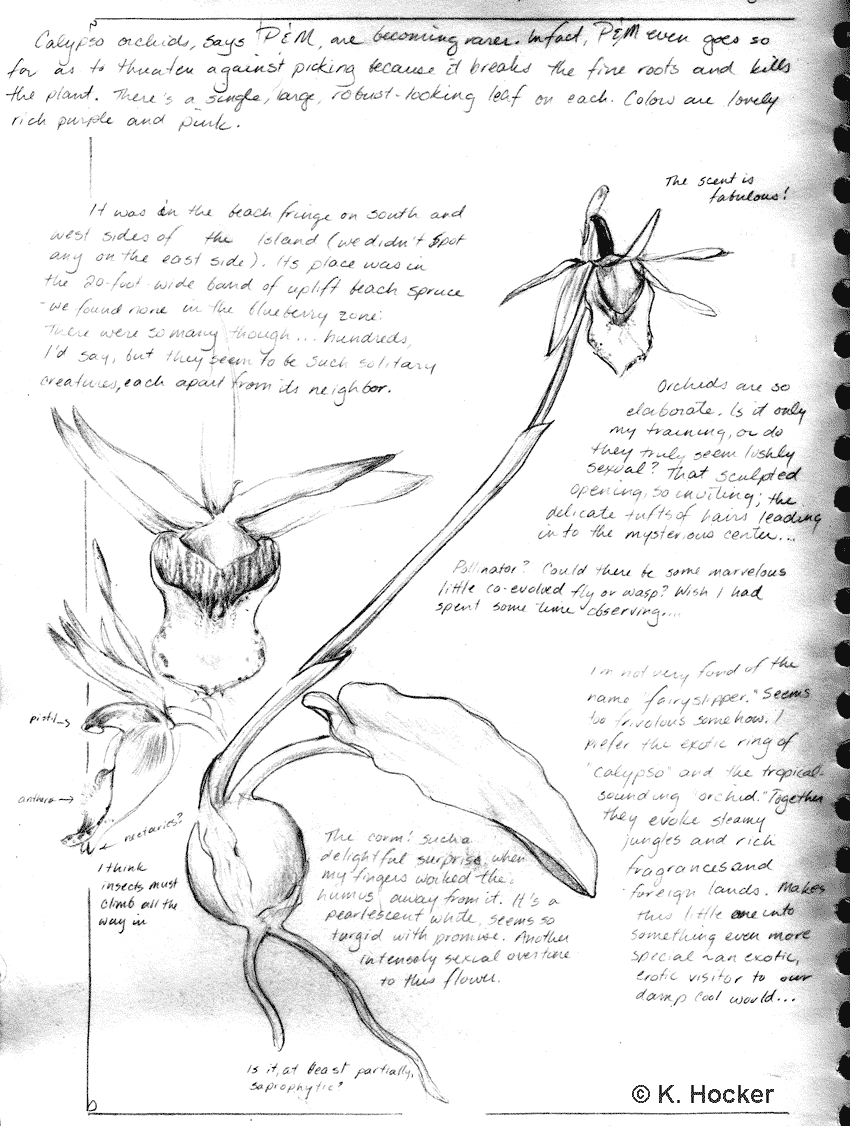
Several years ago, I kayaked to a small island and discovered hundreds of calypso orchids (Calypso bulbosa) growing in the forest duff just above the beach. Enchanted with them, but not having a sketchbook with me that day, I carefully unearthed one, packed it gently away, and brought it home to my studio, where I spent many happy hours sketching it and then creating this colored pencil/watercolor portrait. The blossom lasted weeks, then, along with the leaf, died away. For some reason, I kept the corm in a little container next to my drawing table. The next spring, I was surprised one day to notice a new leaf emerging. I quickly took it out to a beach-fringe spruce grove, and carefully planted it.

I know now that these orchids are both rare and sensitive, and I probably oughtn't to have taken it. Although I tried to transplant it, it likely died (I've not been back to look). But all the same, I'm so glad to have had the chance to get to know it so well. Years later, I can still feel the smooth, pearly surface of that corm…

From the Land of Salt and Spruce

Spruce-sketch-page

Seems to me that Sitka spruce (Picea sitchensis) are the defining tree species of Southeast Alaska's forests. Although western hemlock (Tsuga heterophylla) are more abundant, spruce are more prominent. They grow where we like to go: along coastlines, on riverbanks, on the outwash plains of glaciers. And they follow where we've been: old village sites, abandoned mining ruins, forgotten roads.

My favorite spruce are the ones that colonize this region's uplift meadows (extravagant, lush parklands created as former tidelands are lifted from the sea by glacial rebound). These "wolf spruce" are sturdy, cheerfully-symmetrical little trees, bristling with vigor and growing almost fast enough to watch. I drew this one (and a cone from an older cousin) a few years ago near the Brotherhood Bridge, north of Juneau.