Gustavus willow

Hocker-gustavus-willow-sketchI just got back from a great two weeks in Gustavus, where I was working with students and teachers at the school.The school is wonderful; there are just over 50 students, grades K-12.  And Gustavus is a fascinating place: a broad, flat landscape, formed by outwash from the Glacier Bay glaciers over many centuries. The combination of flat land, lush meadows and wetlands, wandering rivers, and pine/spruce/cottonwood forest are an unusual mix in Southeast Alaska.I saw swans and herons, listened to a wolf moan under the stars, and got thrilled (even a little over-thrilled) by moose.

I'll post a series of Gustavus sketches next, starting with an iconic plant: willow.
Island Naturalists

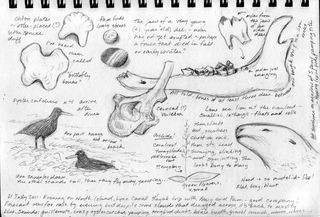
Hocker-kayak-trip-sketch- Spent a blissful three days puttering around Benjamin and North Islands with two naturalist friends. Kayaking and exploring conditions couldn't have been better: warm, sunny days with glassy water, cooler breezy evenings, lovely sunsets, few biting insects. Most importantly, we were surrounded by a paradise of nature puzzles and treasures to discover. Here's a first page of sketches; I'm planning a second page of memory sketches and notes and plan to post it soon.

UPDATE: looks like our mystery orchid is Malaxis (Hammerbya) paludosa, bog adder's-mouth orchid.

Unalakleet visit, part 3

Unk-sketch-4 On the ski picnic, I collected some branches of white spruce (Picea glauca) and felt-leaf willow (Salix alaxensis) that had been cut during the festivities. The willows in particular were interesting. The tips of many of the branches were as densely-furred as hares' feet, making them shine and sparkle as if frost-covered. Within a day of my bringing this branch in and putting it in water, the catkins were swelling dramatically, shoving the protective scales off at the tips–a process that's listed as one diagnostic characteristic of this species.

Unalakleet visit, part 1

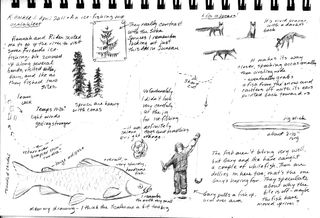
Unk-sketch-1 I just returned from a two-week artist-in-residence visit to Unalakleet, in western Alaska on the shore of Norton Sound. It was a wonderful experience–and in addition to getting to work with wonderful students and teachers, I had the opportunity to observe and sketch a fascinating corner of the world. I'll be posting sketch pages from the visit over the next few days.

The first page was done from memory on my first day, when I was whisked off to visit some ice fishers on the river.

Shoreline spruce afternoon

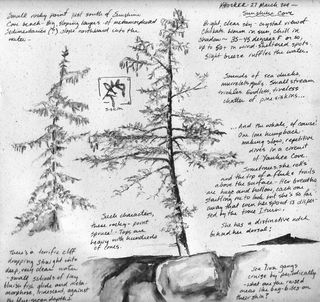
Shore-spruce-sketch-page-k-hocker Unexpected weekend sunshine sent us on a road trip north of Juneau to a little beach near Sunshine Cove. We sat several hours on a rocky outcrop, watching and listening to the abundance of the wakening northern world. I took the opportunity to practice drawing the textures of foliage on the little salt-battered shoreline spruce. 

Small World

Lichen-sketch-page My eye got caught by lichens today, so I brought a few samples home to draw. I got  my little digital microscope fired up, and had a great time looking closer and closer…

Milo tree

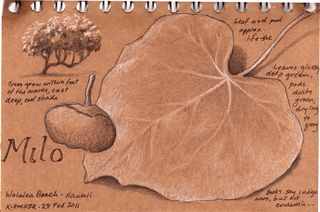
Milo This is milo (Thespesia populnea), a small tree we saw fairly frequently, especially near beaches. It may be native to Hawaii, but may also have been brought to the islands by the Polynesians–in either case, it's a very important tree in Hawaiian culture.

Milo is widespread in coastal areas of the East Indies and Polynesia. The wood is rich reddish-brown at the heart, with some white "marbling" that is quite lovely; we saw many beautiful things made from milo wood. 

We also appreciated the cool, deep shade it provides along the beaches–especially important to this pale, easily-burned Alaskan…

Hungry for Spring

Menziesia I caught myself thinking this morning, In just a month, we'll be hearing varied thrushes… in just two months, we might be starting to work the soil in the garden beds… in just three months, the little lilies will be blooming… It's that time of year when I struggle to appreciate what's here rather than just longing for what's coming.

So the compromise is to look at seed capsules and buds. Rusty menziesia is a good example; its handsome little capsules are gaping wide this time of year, its seeds long gone, and the buds are sharp and tight and just touched with rusty color. They're late-openers around here, though–it won't be until long after the blueberry bells are out that these buds will open.

Deer Food

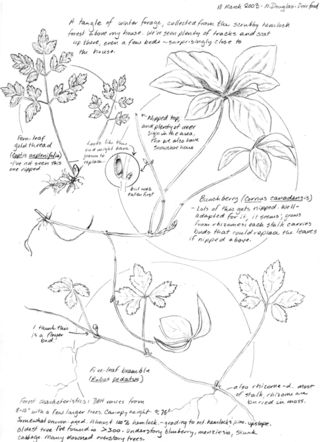
Deer food2  This one's a "vintage" page from several years ago. I set out to take a closer look at three plants that are considered critical winter food for Sitka black-tailed deer (Odocoileus hemionus), the little forest deer of Southeast Alaska. 

In winter, when the more delectable plants are sleeping deciduously underground or buried beneath heavy snow, these three winter-greens tough it out on the floor of the broken-canopied hemlock/spruce forest. 

We've been seeing a lot of deer lately near my home. The warm sunny spring/early summer has coaxed bursts of ridiculously lush greenery out along the roadsides and beaches. Happy deer…

Chile, part 5

Notrosketch2 On the island of Chiloe, the forests were aflame with the bright red blossoms of notro trees. Firecrown hummingbirds, cometocino finches, blackbirds, and others were busy with the very nectar-rich flowers. Like hummingbirds everywhere, the firecrowns defended the trees fiercely.