The sundial project

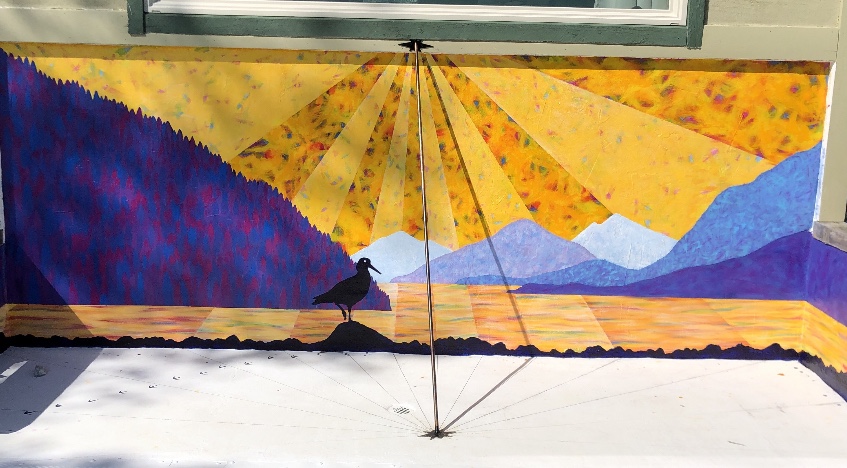
Partially-completed sundial. The oystercatcher’s eye marks the noon line. Can you tell what time this photo was taken?

A couple of years ago, my friends Kim and Wayne asked me to paint a mural on their house. They had built a small greenhouse, then decided they didn’t want it anymore. They disassembled it, leaving an empty roofless alcove on the house’s outside south wall.

They didn’t have any strong feelings about what the mural would consist of, so I spent way too long pondering what to paint. They’re both avid sea kayakers, so I thought it would be nice to include some representation of the kayaking experience—maybe a beach scene with various critters?

Then one day I had an idea. The mural alcove faces due south, and their house has almost 360 degree sun exposure. How about a mural that would function as a sundial? I proposed it, and they liked the idea.

Next: what style of sundial would work best here? There are many choices! After researching, my favorite options were:

1. A horizontal style, which is what a lot of folks (including me) picture when they hear “sundial.” An angled gnomon sticks upward, casting a moving shadow across a horizontal surface.

2. A vertical style, with the angled gnomon mounted on a wall; the shadow travels across the wall below.

Pretty quickly I realized that these two are not mutually exclusive. If we used an angled bar, attached at both ends, as the gnomon, we would have both types of sundial in one. That approach seemed like it would suit the space well: a rocky shoreline scene, giving the effect of relaxing on the beach and watching wildlife, with hour markings designed into the scenery on the wall and floor.

Wayne got very interested in the process, and while I refined the mural design, he dug into gnomon planning and construction. He made the gnomon from a length of pipe, and forged two decorative brackets out of steel. After considerable research, many compass bearings, and night-time sightings on Polaris, he found the correct angle and bearing to mount it.

That was last summer. Since then, all of us have been watching the shadows and marking the hours. In the process, we discovered that sundial (solar) time doesn’t exactly match clock time! This has to do with the Earth’s elliptical orbit around the sun; the speed of the sun’s apparent motion across the sky is different at different times of the year. We witnessed this firsthand last winter when the shadows were as much as 10-15 minutes off the marks we’d made in late summer. Some sundials have adjustments to account for this discrepancy, but we decided to just embrace solar time.

This summer I started painting. The sundial spot is not covered, so I’ve had to wait for dry days, but fortunately we’ve had a few good sunny spells lately. It’s been a treat to watch the shadow crawl across the mural as I work, and it has been really satisfying to watch it keep time.

I finished the background on the vertical wall a couple of weeks ago. Last week, just in time for Solstice, I started adding the bird-silhouette hour markers. On each solar hour, the gnomon shadow will pass across the eye of a bird. The first bird I added is a favorite of Kim and Wayne’s: a black oystercatcher (lugán in Lingít). It’s at the noon hour.

13 more birds to go, and then I need to tackle the horizontal sundial on the floor!
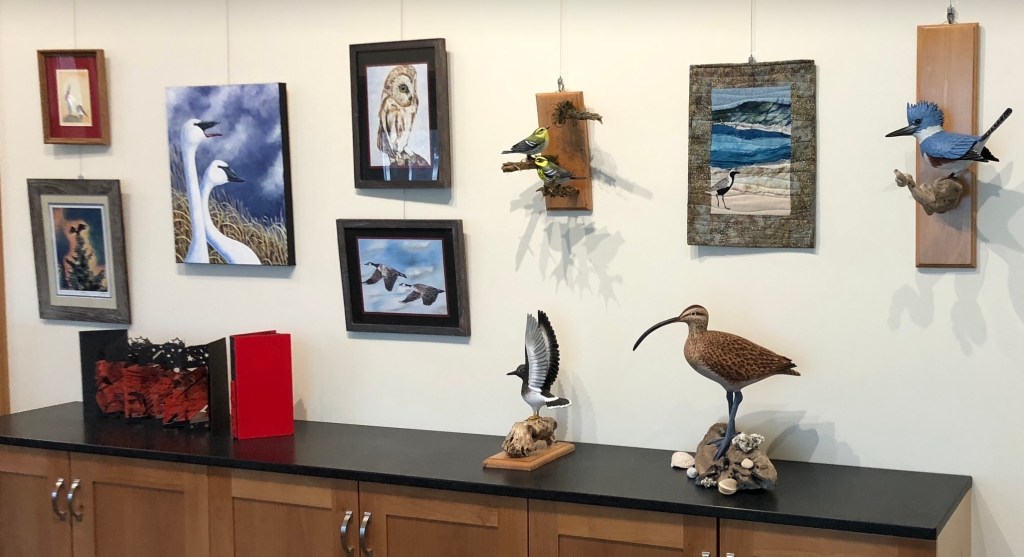
Bird show!

The Gustavus Community Center has a nice little gallery space in its foyer, where local artists have been holding monthly themed shows. May’s theme is birds. It is a great opportunity for Steve and me to display some of our recent collaborative bird sculptures (Steve carves them and creates the mounts, and I paint them). This photo shows half of the show. I painted the kingfisher, warblers, and whimbrel. Steve painted the turnstone.

The swan painting on the left is also mine. It took me four years to paint… not because I painted slowly but because I couldn’t decide on an approach for the sky!

One more Artober entry

Here’s the last set. As in previous years, this has been challenging, fun, and surprisingly productive—every year, I’ve ended up with at least one or two images that turned into other art projects—from sweatshirt designs to greeting cards. I wonder which of this year’s will inspire a future art piece?

My thanks to the folks at SCBWI and GNSI for creating the prompt lists!

“Whiskered”
“Shell.” These are from one of my favorite clam species… the delightfully wonky (and highly talented) piddock (Zirfea pisbryi )
“Parasites”
Another fun exploration of negative space: “Dolphin” and “Bees”
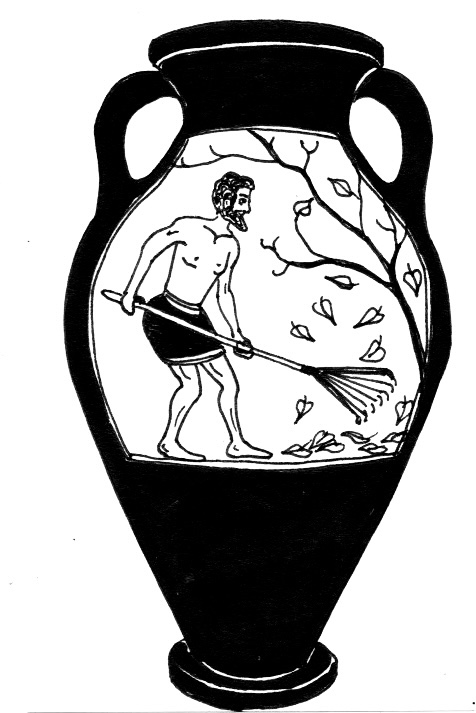
“Amphora” and “Fall”
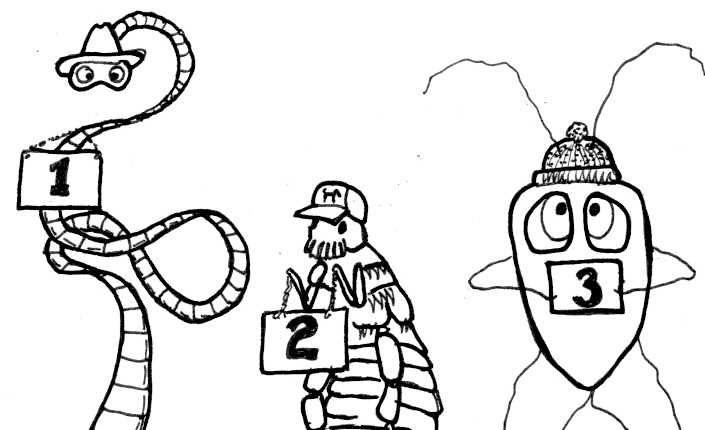
“Snake” and “Boo!”

Artober continues

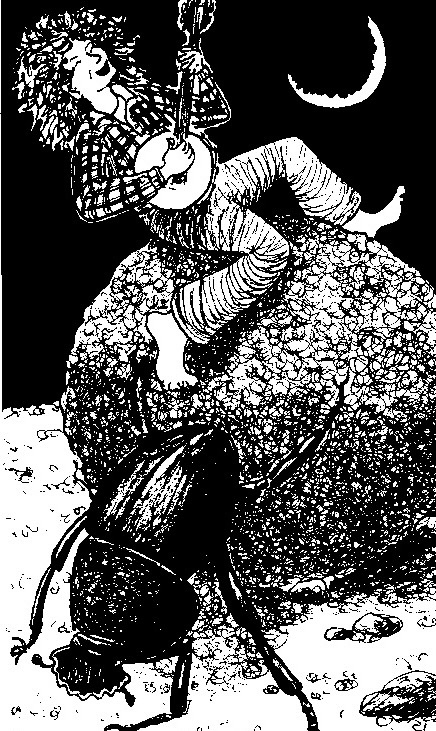
The SCBWI prompt was “Ride,” so of course Banjo Woman was a shoo-in. As for the rest, I’ve been researching dung beetles for a writing project.
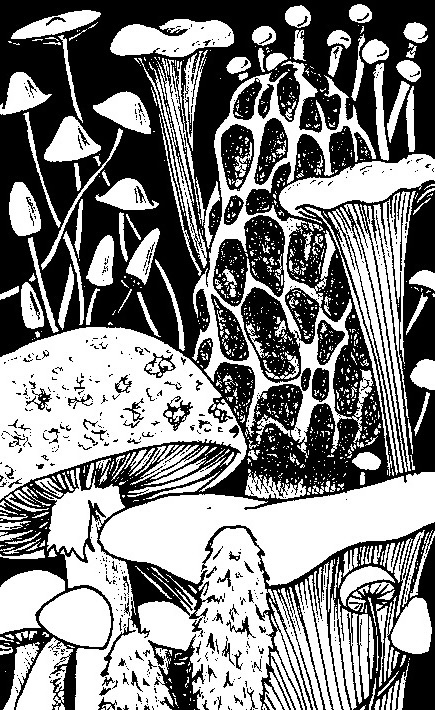
“Mushroom.” I loved drawing this one!
“Exoskeleton” made for a cool abstract pattern. It’s a dung beetle, of course.

More artober catch up

“Root”
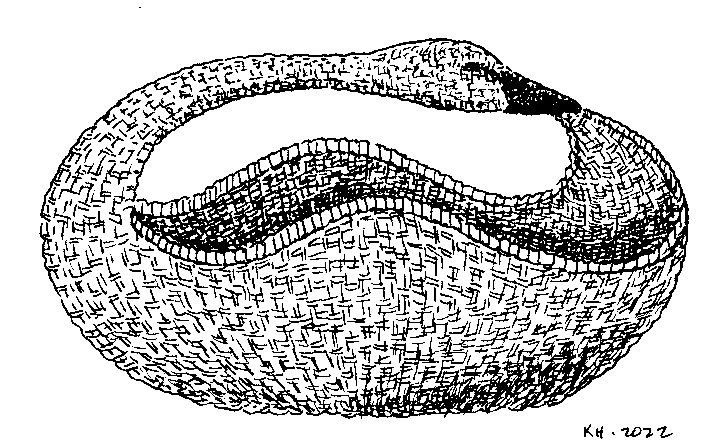
“Bird” and “Basket.” I want someone to make this!
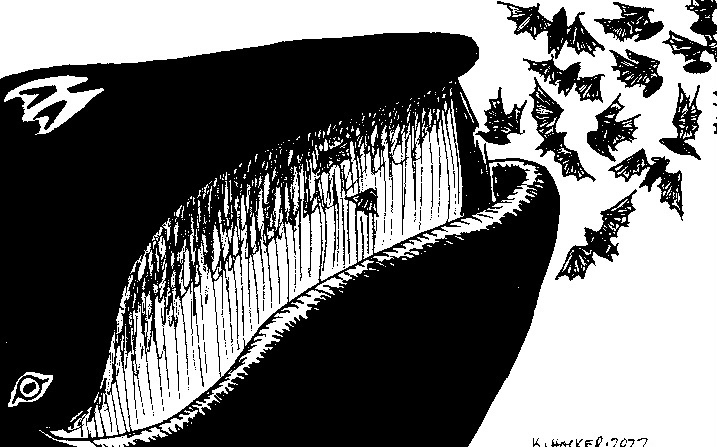
“Plankton” and “Bat.” Of course.
“Scales.” This is based on electron micrographs of placoid scales.

Catching up on Artober!

“Worm” and “Heart.” This one’s going out to my friend Kim,
who loves her worms…
“Rodent.” I like the negative space!
“Footprint”
“Butterfly” and “Full moon”

Artober part 4

Daily drawings from October 7-10.

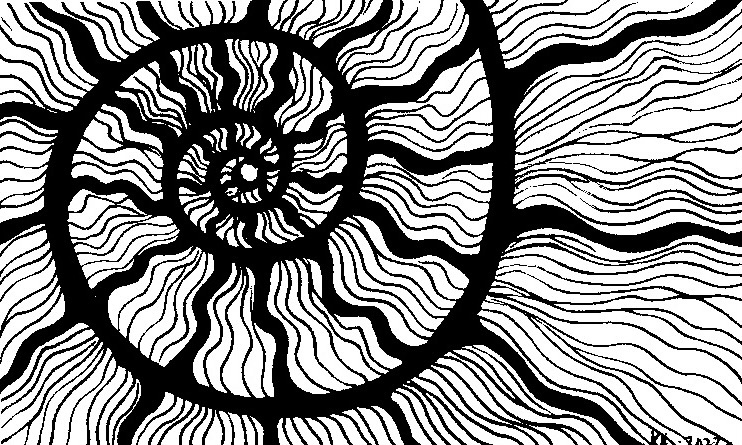
“Fossil” (GNSI)— just riffing on an ammonite cross-section.
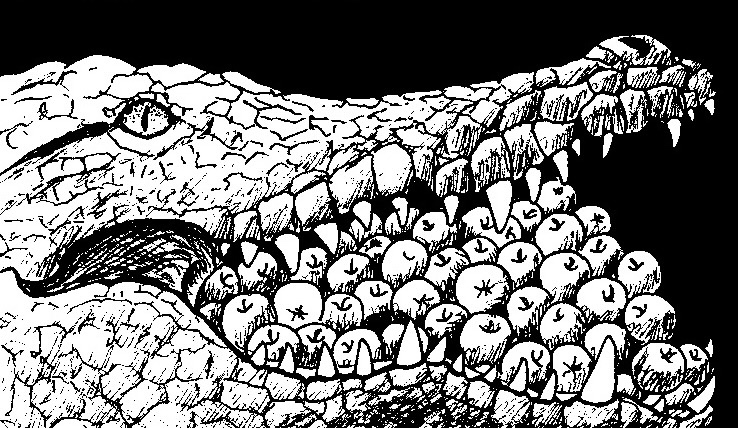
“Reptile” (GNSI) and “Apples” (SCBWI)—I have never drawn a crocodilian before… so this was particularly fun!
“Bear” (GNSI) and “Black” (SCBWI)
“Costume” (SCBWI)—camouflage is a kind of costume, right?

Artober, part 3

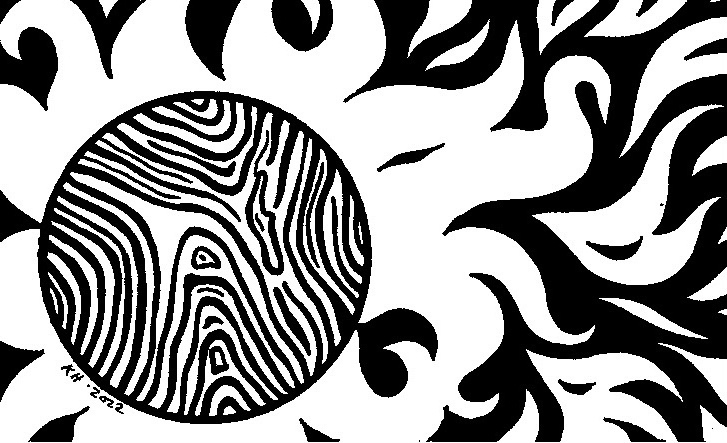
Another day of playing with patterns. The GNSI prompt was “Cell;” the SCBWI prompt was “Fire.” The combination put me in mind of a mitochondrion.
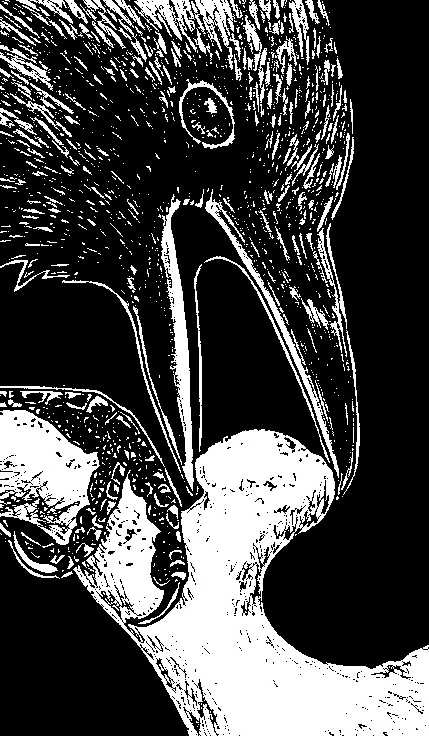
“Bone” (GNSI) and “Crow” (SCBWI)

Artober 2022, part 1

Just started a month of daily ink sketches based on prompts from Guild of Natural Science Illustrators and Society of Children’s Book Writers and Illustrators. I’ve been doing this for the past three years, and I’ve started to look forward to it quite a bit… even though I know I’ll still occasionally experience creativity-freeze, and will still find myself scrawling a few of the dailies at the last minute before bed…

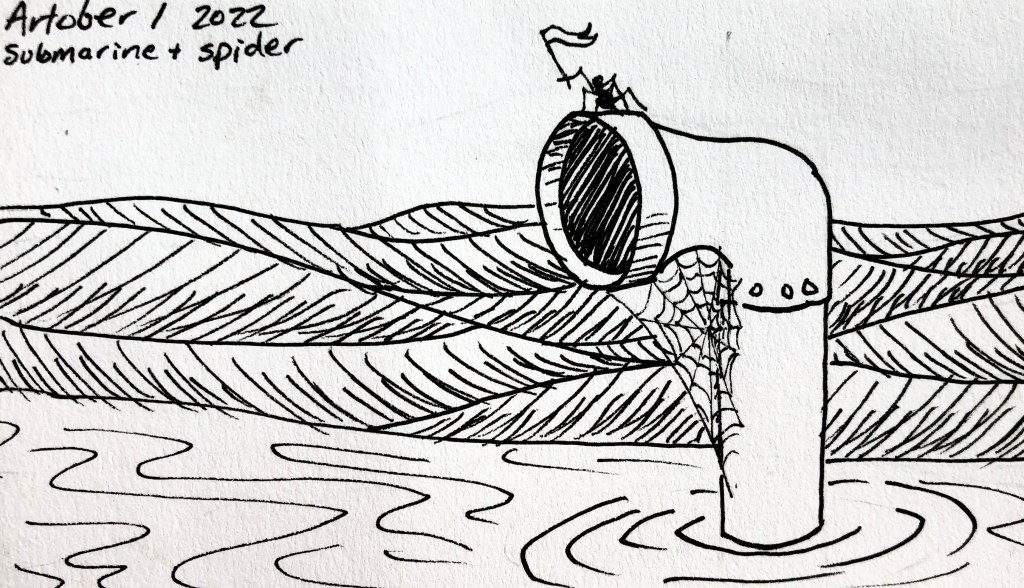
Case in point… Day 1: “Submarine” (GNSI) and “Spider” (SCBWI)
Day 2 is “Egg” (GNSI)

Something leguminous

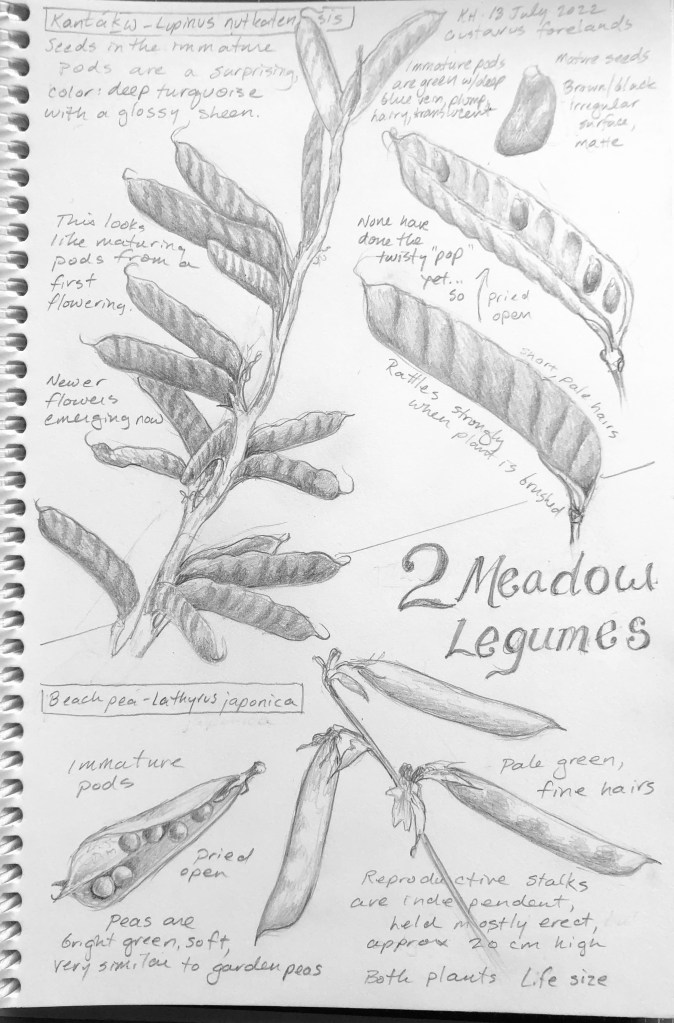
Last week our local plein aire group met at a house with a view of the beach meadows, Icy Passage, and Pleasant Island. I usually try to do some landscape sketching during these outings because that’s a subject I otherwise avoid, but that day I was just more interested in the close-up world.

Kantákw—Nootka lupine—caught my attention first. They’re abundant out in the uplift meadows: big billowing masses of leaves, topped at this time of year with a second flush of purple/blue/white blossoms, and freckled with seed pods drying and browning as they mature. Nearby, beach pea plants sprawl among the mosses and climb ryegrass stems; their pods too are heading toward ripeness. I decided to spend some time observing and comparing these two fabaceous neighbors.

Lingít plant names are from Tlingit Dictionary, edited by X’unei Lance Twitchell. Gunalchéesh for this wonderful resource.